Coordinating Group Experiences in Las Vegas
Planning for twelve people is not simply planning the same evening twelve times. It is a different problem, and it gets harder in a specific way: guests arrive separately, the final headcount moves, vehicles have capacity limits, and one late departure shifts everything scheduled after it.
I've spent more than a decade in Las Vegas hospitality, and I handle every All Set Vegas engagement personally. Most of the groups I plan fall somewhere between eight and twenty people — which happens to be the range where logistical complexity rises fastest. Below that range, most plans absorb a change or two. Well above it, groups tend to accept that the evening has to be more formal. In the middle, guests expect flexibility, and the structure that makes flexibility work is often missing.
That middle range is where I spend most of my time. Deposits and minimum spends apply to many of the rooms worth having. Large tables reduce the number of restaurants that can actually seat everyone together. Some guests want to keep moving after dinner; others are finished for the night. None of that is a crisis on its own. The difficulty is that these decisions are connected, so a change to one usually forces a change to another.
One Group Needs One Clear Point of Contact
The most useful thing a group can settle before planning begins is who is authorized to make decisions.
In practice, that means one organizer confirms the guest count, the budget, the venue choices, the deposits, the deadlines, the transportation and any final changes. It does not mean that organizer ignores everyone else. It means they gather the group's preferences — usually by asking directly — and then confirm a single plan on the group's behalf.
When a venue, a driver or a host receives instructions from three different people, the plan starts to drift. Timing gets confirmed twice with two different answers. A deposit is assumed rather than paid. Someone asks for a table count that no longer matches the list. Asking every guest for a separate opinion is a reasonable instinct, but it slows decisions down and creates conflicting instructions at the moment the plan needs to stop moving.
Preferences can be gathered from anyone. The plan should be confirmed by one person.
Every Group Has Its Own Character
Group size tells you something useful about logistics. It tells you very little about what the group actually wants.
- Corporate and client groups
- Milestone celebrations
- Bachelor and bachelorette groups
- Couples and friends traveling together
- Multi-generational families
- Convention and work groups
Two groups of fourteen can need completely different evenings. What separates them is rarely the number:
- Ages
- Relationships
- Energy levels
- Mobility
- Drinking preferences
- Dietary needs
- Budget comfort
- Whether the guests already know one another
- Whether the group wants one shared experience, or the flexibility to separate
That last point matters more than it sounds. Some groups want to stay together all night and will happily trade variety for that. Others are better served by a plan that lets people drift into smaller groups after dinner. Those are different evenings, and they lead to different venues and different timing. I would rather ask than assume.
The Headcount Affects Almost Everything
It is tempting to treat the guest count as a detail that can be settled later. In practice it is one of the earliest decisions that constrains everything else. Moving from ten guests to fourteen can affect:
- Restaurant table configuration
- Private-room availability
- Vehicle size
- Ticket inventory
- Nightlife table capacity
- Minimum spends
- Deposits and cancellation terms
That is why I work from the most realistic confirmed count rather than the largest number anyone mentions. It is also why flexibility should be discussed before deposits are paid, not after. If a venue can hold a range of party sizes, that is worth knowing in advance. If a group is sitting close to a threshold, the difference between ten and fourteen may change the venue — not just the table.
Venues set their own capacity, minimums and cancellation terms, and those vary by date and by room. I don't assume a venue will accommodate a change. I ask, and I treat the answer as the venue's to give.
Distance on a Map Is Not the Same as Travel Time
Las Vegas looks compact on a map. Moving a group of twelve through it is a different exercise.
A short distance between two properties can take considerably longer than the map suggests, for reasons that have nothing to do with distance:
- Where a resort entrance actually sits relative to the room you're in
- Walking through large properties before you reach an exit
- Rideshare and limousine pickup areas, which aren't always at the door
- Strip traffic at peak hours
- Event traffic when a show or a game lets out
- Loading a larger group into a vehicle
- Guests leaving their hotel rooms at different times
None of these are unusual problems. They are the ordinary conditions of moving people around Las Vegas. What I plan for is realistic transition time: enough that the group isn't rushed, without creating long periods of dead time between stops. A plan that spans several resorts needs more room between venues than one contained in a single property. That is a scheduling decision, not a service upgrade.
Transportation Has to Match the Group
There is no single correct way to move a group. Each option changes how the evening feels, and each one carries a trade-off.
Several rideshare vehicles. Flexible, easy to arrange at short notice, and simple to scale if the count moves. The trade-off is that vehicles arrive separately, may be routed to different pickup points, and can reach the destination at different times. The group tends to reassemble rather than arrive together.
One larger vehicle. Keeps everyone in one place and turns travel into part of the evening itself. It also requires a firm departure time and a loading location that can actually take the vehicle — which is not always the entrance closest to where you are. If one guest is running late, the whole group waits.
Guests meeting at the venue. Sometimes the simplest answer, particularly when people are staying at different properties. It removes most of the coordination and puts the group back together where it matters. It also means arrival times will vary, which the venue needs to know in advance.
A planned split after dinner. If part of the group is continuing and part is heading back, deciding that beforehand is far easier than deciding it at the curb.
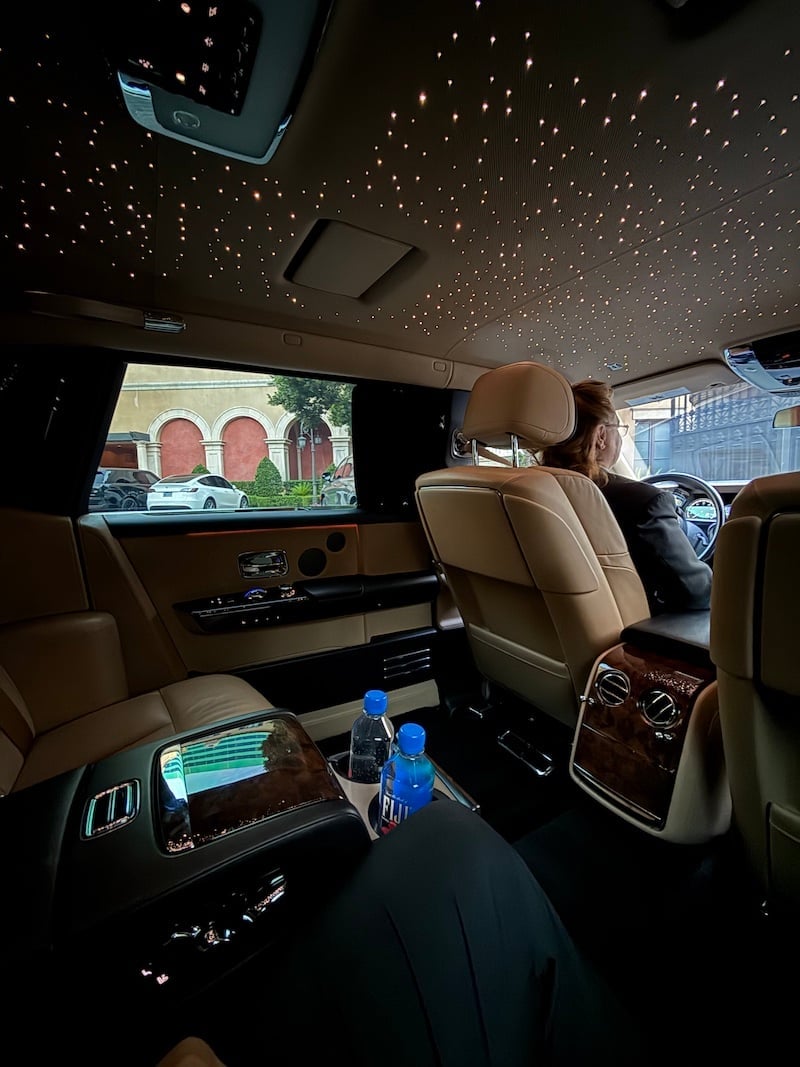
What I try to match is the option to the group, rather than to a preference for how transportation "should" work. A group that values arriving together will usually accept a fixed departure time. A group that values flexibility will usually accept the friction of separate vehicles. Transportation availability, timing and service remain controlled by the provider, and I plan around what they can confirm.
Large-Group Dining Is More Than Finding a Table
A restaurant that seats six comfortably may not seat fourteen together at all, and the room that can may work quite differently. Group dining usually involves more than a reservation:
- One long table versus several smaller tables
- Private or semi-private rooms
- Prix-fixe or limited group menus
- Deposits
- Minimum spends
- Cancellation terms
- Dietary needs
- Seating arrangements
- Service pacing
The best option is not always the most private or the most expensive room. A large private room can swallow a group of ten and make the meal feel formal and distant, while a well-placed table in a lively room suits the same group far better. The layout and the service style have to fit the purpose of the meal, not just the size of the party.
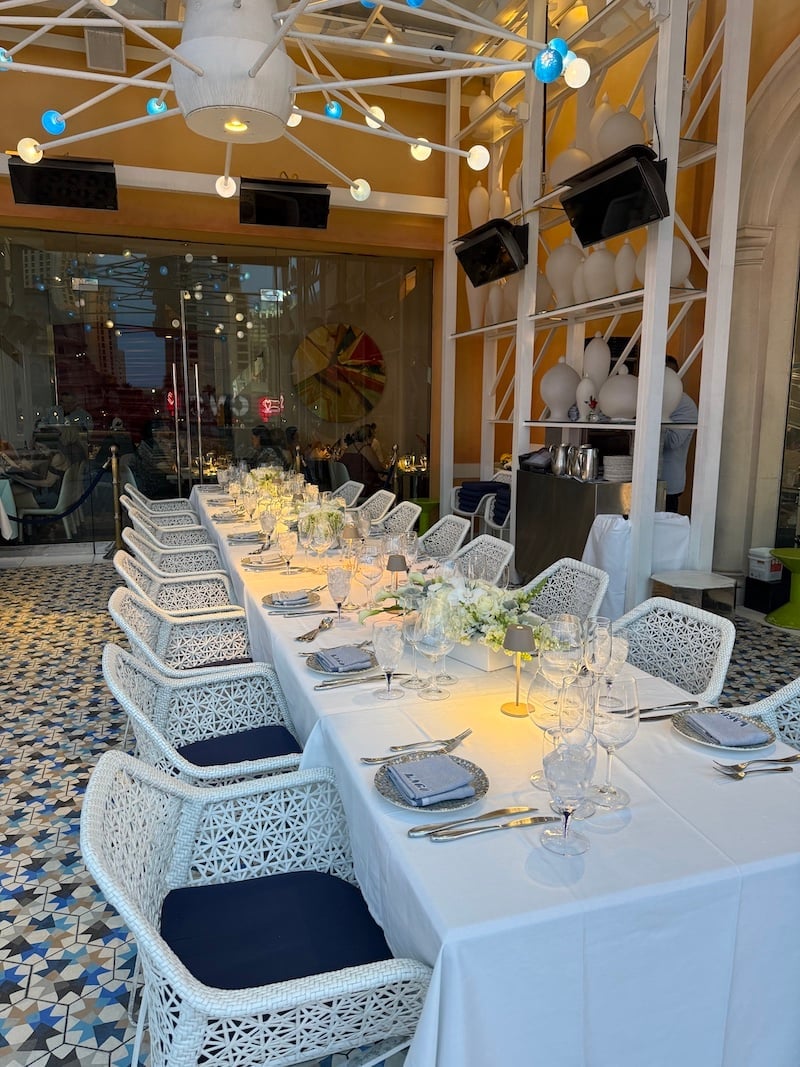
When an occasion genuinely calls for a private setting, I treat it as its own problem rather than as a seating upgrade. I've written about that separately in my notes on private dining in Las Vegas.
Match the Venue to the Group
A corporate dinner, a milestone birthday, a bachelor group and a multi-generational celebration need different rooms, different energy levels and different service styles. A space that is perfect for one can be wrong for the next at the same price.
The most popular venue is not automatically the right venue. A restaurant can be excellent and still be the wrong room for your group — too loud to hold a conversation across, too tight for the table size, or paced for a shorter meal than the evening needs. The venue decides how its room is run and where a table sits. My part is choosing well and asking clearly.
I explain how I weigh that in A Concierge's Perspective on Dining in Las Vegas.
Plan for the Moment the Group Separates
Most group evenings split at some point. After dinner, some guests want nightlife. Some would rather find a lounge and sit. Others are ready to call it a night. Occasionally someone arrives later than everyone else and needs to join the group mid-evening.
These aren't problems to solve in the moment. They're outcomes to plan for in advance. When the possibility is discussed before the trip, the options are clearer: who is likely to continue, where the split happens, how each part of the group gets back, and where people reconvene if they want to.
I can't promise that every change is solved immediately. A venue may be full, a vehicle may already be booked, a table may not be able to grow. What advance planning does is narrow the number of things that have to be figured out live, at a crowded entrance, with the group standing around.
Make Responsibilities Clear Before the Trip
Group plans tend to go wrong quietly, in small administrative gaps. Most are avoidable with a short conversation before anyone pays anything. It helps to settle:
- Who approves the plan
- Who signs venue agreements
- Who pays deposits
- Which guest presents the payment card on the night
- Which charges are paid directly to providers
- What cancellation terms apply
- Who communicates final changes
This matters because deposits and deadlines are usually non-negotiable, and because a table held under one person's card while another person believes they are paying is a common source of friction later.
All Set Vegas clients pay restaurants, venues and transportation providers directly. I don't collect those charges, and I don't accept venue commissions, affiliate payments or preferred-partner incentives.
Planning Before the Trip and Help During the Evening Are Different
These are two different levels of support, and it's worth being precise about which one you're choosing.
The Blueprint provides focused pre-arrival planning and coordination for the priorities agreed upon before planning begins. It is planning work: venue selection, sequencing, timing and the questions that need answers before the trip. It does not include continuous live-concierge availability during the trip, and it does not include automatic on-site group management.
Executive Hosting adds my on-site presence during one selected evening and an agreed coverage window. It means I am there in person for that evening — not that I appear at any point during the trip.
One thing worth stating plainly: Executive Hosting does not give me control over venue or provider decisions. Venues control their own availability, tables, pacing and policies. Transportation providers control their vehicles and schedules. What I bring is presence, preparation and someone whose job is to keep the plan moving. That distinction comes up often when travelers are comparing options — it's one of the differences covered in this comparison of Las Vegas concierge services.
A Group Experience Works When the Decisions Work Together
Successful group planning is not about filling a schedule. It is about making decisions that remain realistic when several people, properties and providers are involved.
That's a higher bar than it sounds. A plan can look impressive on paper and come apart because the travel time was optimistic, the headcount was never confirmed, or nobody was authorized to make the final call.
The goal is not to make every guest follow an inflexible schedule. It is to create a plan clear enough to keep the group together and flexible enough to handle the moments when it does not. It's the same principle behind why a great night in Las Vegas is about more than reservations.
When the decisions fit together, the evening feels simple. That simplicity is the work.