Most visitors arrive in Las Vegas with a simple plan: book a dinner reservation, book a nightclub table, and let the evening take care of itself. It's an understandable approach. In most cities, reservations are the hard part, and the rest tends to follow.
Las Vegas doesn't work that way. A reservation gets you in the door. What happens after that — how the group feels, whether the night builds or fades — depends on things no booking confirmation can capture. This article explains what those things are, and why they matter more than most visitors expect.
Transportation is usually treated as an afterthought — a logistical box to check. In Las Vegas, how a group moves between venues is often what determines whether the evening keeps its pace or quietly loses it.
A long wait for a rideshare on a busy night, a detour that doubles travel time across the Strip, two cars arriving at different entrances: these are the interruptions that pull a group out of the experience, and momentum is hard to rebuild once it's gone.
The best transportation plan is one nobody notices. Guests arrive where they need to be, when they need to be there, without thinking about how it happened. A rideshare can work perfectly well on an ordinary night. On a compressed schedule with a fixed entry window, having the ride arranged ahead of time is simply one less variable.
Booking a table at a premier nightclub is one thing. Knowing which table to book — and why — is something else entirely.
Placement affects nearly everything: sightlines to the DJ and dance floor, proximity to the energy of the room, how easily waitstaff reach you, and how much room the group has to move. Two tables in the same venue, at similar minimums, can produce completely different nights. If you want the longer explanation, I've written about why the right table matters more than the right club.
The right table matches the group's intent — center of the action, or somewhere conversation is still possible. The wrong table usually comes from taking what was available instead of asking what actually fits.
One of the most common planning mistakes is treating dinner and nightlife as independent decisions. They aren't.
A multi-course tasting menu with wine pairings sets a completely different tone than a shared-plate dinner in a loud, lively room. One leans toward a slower evening; the other builds toward a club. Neither is better, but pairing the wrong dinner with the night that follows creates a mismatch you can feel. A meal should also reach its natural conclusion without the group feeling rushed out the door or left waiting on a check.
The strongest itineraries treat dinner and nightlife as two halves of the same evening. When they complement each other, the move between them stops feeling like a transition at all.
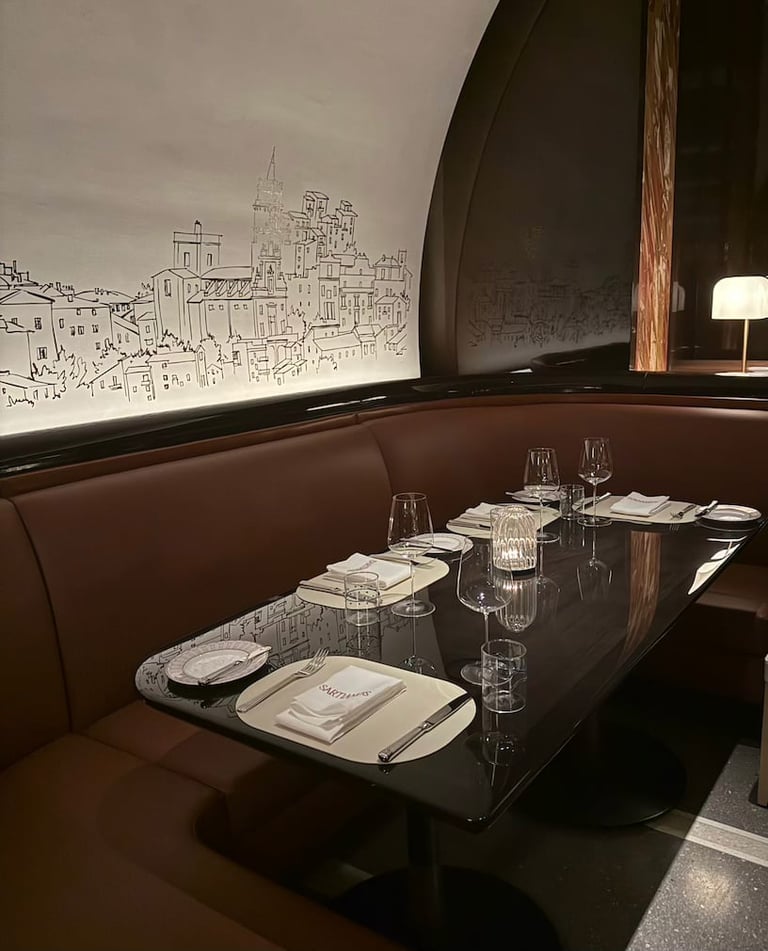
The setting shapes the story of the evening
Securing a reservation is one skill. Knowing when to set it is another.
Dinner that starts too early leaves the group killing two hours before the club opens. Dinner that starts too late turns the meal into a countdown, with guests watching the clock and cutting conversations short. The same applies after dinner: arrive too early and you're standing in a half-empty room, arrive too late and you may miss the preferred entry window or the part of the evening that best suits your group.
The goal is a rhythm where each stop leads into the next — no rushing, no waiting. That's hard to get from bookings made in isolation. It helps to know how each room actually runs on the night you're going, and those patterns shift by season, by night and by event.
Most people choose a restaurant by reading the menu. The food matters — Las Vegas has some of the best dining in the country — but what usually decides whether a restaurant works for a specific group has less to do with the kitchen than the room.
Music volume. Lighting. How tightly the tables are packed. Whether service is formal and deliberate or quick and casual. Those things shape how a room feels, and how a room feels carries straight into the rest of the night. If you want a place to start narrowing it down, I keep a Las Vegas restaurant guide organized by occasion.
A room that's perfect for an anniversary dinner can be completely wrong for a bachelor party of twelve. The goal isn't the best-reviewed restaurant. It's the right one for that group, on that night.
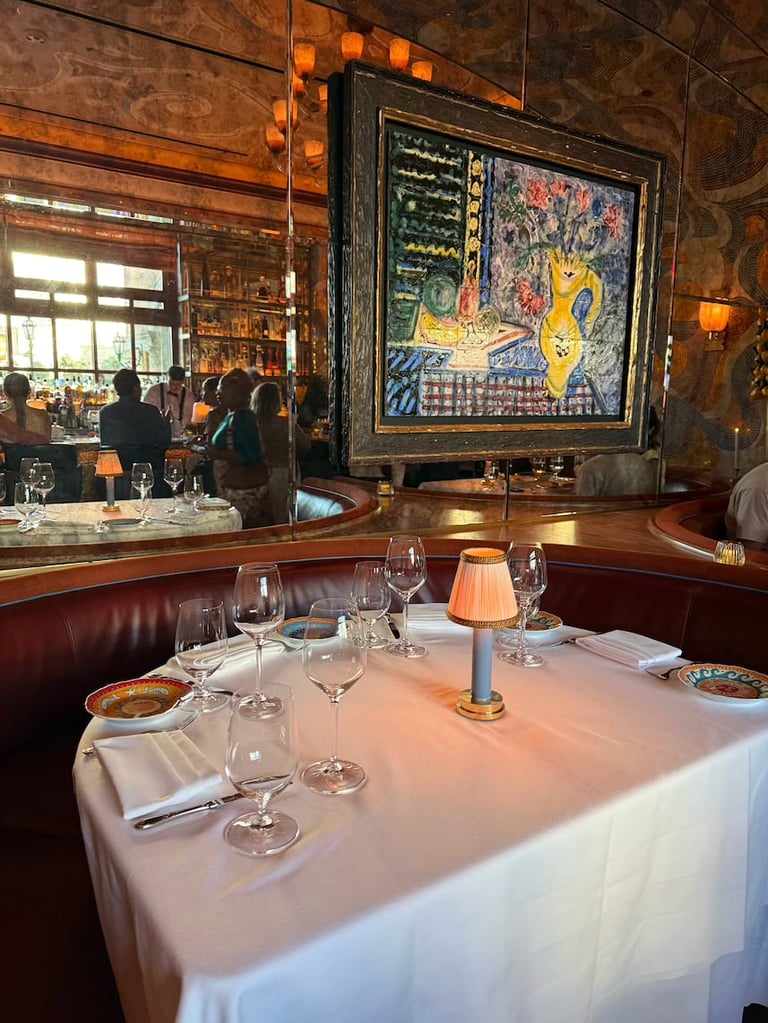
Atmosphere is felt before it's understood
After a good night in Las Vegas, people talk about the restaurant, the table, the music, the venue. That's how it should be — those are the parts worth remembering.
What nobody mentions is the sequence behind it: the dinner time that left room before the club, the table that kept the group together, the car that was already waiting. Good planning is invisible by design.
None of this means every detail can be controlled. Venues run their own rooms, traffic doesn't care about your schedule, and plans change. What preparation buys you is a realistic timeline and someone who can respond when something shifts. I've compared the different models — credit-card desks, casino hosts, venue hosts and independent concierges — in a separate breakdown of Las Vegas concierge services.
Choose Your Level of Support
The Blueprint provides focused pre-arrival planning for the priorities we agree on. Executive Hosting adds my on-site presence during one selected evening and an agreed coverage window.
Jad Haidar is the founder of All Set Vegas and a state-registered independent concierge with more than a decade of experience in Las Vegas hospitality, VIP services and guest coordination.